
7 Signs Your Relationship Is Worth Fighting For (And When to Let Go)
Discover the 7 key signs your relationship is worth saving and when it’s time to let go. Expert advice on evaluating your partnership, recognizing healthy vs. toxic patterns, and making the right decision for your future.
Every relationship faces challenges. Whether you’ve been together for six months or six years, there comes a moment when you ask yourself: “Is this relationship worth fighting for?” It’s one of the most difficult questions you’ll ever face, and the answer isn’t always clear.
If you’re reading this, you’re likely standing at a crossroads, wondering whether to invest more energy into saving your relationship or whether it’s time to walk away. The good news? You’re not alone, and there are clear indicators that can help guide your decision.
According to research from the Gottman Institute, 69% of relationship problems are perpetual, meaning they never fully go away. What matters isn’t whether you have problems—it’s how you handle them together.
This article will help you identify the seven crucial signs that indicate your relationship is worth the effort, and equally important, recognize when it might be time to let go.
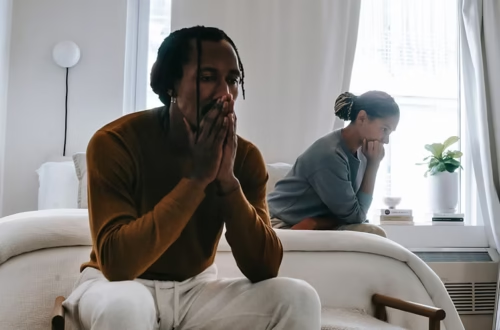
[Image Reference: Couple sitting together having a serious conversation, looking at each other with concern but connection]
Understanding the Difference Between Growing Pains and Deal Breakers
Before we dive into the signs, it’s essential to understand that every healthy relationship experiences conflict.
Disagreements about finances, communication styles, or how to spend weekends don’t automatically signal the end. These are normal growing pains that, when addressed constructively, can actually strengthen your bond.
However, there’s a significant difference between challenges you can work through together and fundamental incompatibilities or toxic patterns that erode your well-being. Learning to distinguish between the two is crucial for your emotional health and future happiness.
The 7 Signs Your Relationship Is Worth Fighting For
1. You Still Have Mutual Respect
Respect is the foundation of any lasting relationship. Even during your worst arguments, if you and your partner maintain basic respect for each other’s feelings, boundaries, and perspectives, that’s a powerful indicator that your relationship has a solid foundation.
Signs of mutual respect include:
- You listen to each other’s viewpoints, even when you disagree
- Neither partner resorts to name-calling or personal attacks
- You consider each other’s feelings before making major decisions
- You apologize when you’ve hurt each other
- You support each other’s goals and aspirations
Dr. John Gottman, renowned relationship researcher, identifies contempt as one of the “Four Horsemen” that predict relationship failure. If contempt—characterized by mockery, sarcasm, and hostile humor—is absent from your conflicts, and respect remains intact, your relationship has what it takes to survive tough times.
2. Both Partners Are Willing to Work on the Relationship
Perhaps the most critical sign that a relationship is worth saving is that both people want to save it. A relationship cannot thrive on the efforts of just one person—it requires mutual commitment and willingness to grow.
Ask yourself:
- Is your partner open to couples therapy or relationship counseling?
- Do they acknowledge their role in relationship problems?
- Are they willing to make changes and compromises?
- Do they initiate conversations about improving the relationship?
Related Post: How To Make This Christmas The Best One Yet For Your Marriage: Creating Memories That Bring You Closer
According to the American Association for Marriage and Family Therapy, couples who seek therapy have a 70% success rate in improving their relationships.
However, this only works when both partners are genuinely invested in the process. If your partner consistently refuses to acknowledge problems or make any effort to improve things, this is a red flag.
3. You Share Core Values and Life Goals
While opposites may attract initially, long-term relationship success depends heavily on shared core values. You don’t need to agree on everything, but alignment on fundamental issues creates a strong foundation for your future together.
Core values and goals include:
- Views on marriage and commitment
- Desire to have (or not have) children
- Financial priorities and money management
- Career ambitions and lifestyle preferences
- Religious or spiritual beliefs
- Family importance and involvement
Research published in the Journal of Personality and Social Psychology found that couples with similar values report higher relationship satisfaction and are more likely to stay together long-term. If you and your partner share these fundamental values, even if you differ on smaller preferences, your relationship has the compatibility needed to weather storms.

4. The Trust Foundation Still Exists (or Can Be Rebuilt)
Trust is essential, but it’s also complex. While a single breach of trust—like infidelity—can severely damage a relationship, it doesn’t automatically mean the relationship is over. What matters is whether the foundation for rebuilding trust exists.
Your relationship is worth fighting for if:
- The partner who broke trust shows genuine remorse and accountability
- They’re transparent about their actions and whereabouts
- Both partners are willing to do the hard work of rebuilding
- The betrayal was an isolated incident, not a pattern
- The relationship had a strong trust foundation before the breach
However, if trust has been repeatedly broken, or if your partner shows no remorse or willingness to rebuild trust, this indicates a deeper problem.
Dr. Shirley Glass, infidelity expert, notes that successful recovery from betrayal requires the offending partner to fully commit to transparency and the injured partner to work toward forgiveness—both are necessary.
5. You Bring Out the Best in Each Other
Healthy relationships should elevate you, not diminish you. While every couple has their challenging moments, the overall trajectory of your relationship should be one of mutual growth and encouragement.
Consider whether your relationship:
- Motivates you to be a better version of yourself
- Provides emotional support during difficult times
- Celebrates your achievements and successes
- Encourages your personal growth and development
- Creates space for both partners to pursue individual interests
A 2019 study from Northwestern University found that people in healthy relationships report higher levels of self-esteem, better health outcomes, and greater life satisfaction. If your relationship contributes positively to your personal development and well-being, it’s worth investing in.

6. The Love Is Still There—It Just Needs Attention
Love evolves over time. The intense passion of early romance naturally transforms into a deeper, more companionate love. This transition is normal and doesn’t mean your relationship is failing.
Your relationship is worth saving if:
- You still feel affection and care for your partner
- You can remember why you fell in love
- Physical intimacy exists, even if it’s less frequent
- You enjoy spending time together
- You miss each other when apart
- Small gestures of love still occur
According to relationship expert Dr. Sue Johnson, creator of Emotionally Focused Therapy, love isn’t just a feeling—it’s a bond that can be strengthened through intentional connection.
If the underlying love and attachment are present, even if currently buried under resentment or stress, the relationship can be revitalized with proper attention and effort.
7. You Can Envision a Happy Future Together
When you think about your future, can you see your partner in it? Not just out of habit or fear of being alone, but because you genuinely want them there. This vision is a powerful indicator that your relationship has potential.
A relationship worth fighting for is one where:
- You both discuss future plans that include each other
- You’re excited about creating memories together
- You can imagine growing old with this person
- The future feels brighter with them in it
- You’re willing to make sacrifices for your shared future
If you can authentically picture a happy future together—and your partner shares this vision—your relationship has the forward momentum needed to overcome current challenges.

When It’s Time to Let Go: The Warning Signs
While fighting for your relationship can be noble, it’s equally important to recognize when letting go is the healthier choice. Here are critical signs that indicate it might be time to walk away:
Persistent Emotional or Physical Abuse
There is never an excuse for abuse. If your partner is physically violent, emotionally manipulative, or consistently degrades you, the relationship is not worth saving. According to the National Domestic Violence Hotline, abuse typically escalates over time and rarely improves without professional intervention.
Fundamental Deal Breakers
Some differences cannot be compromised. If one person desperately wants children and the other absolutely doesn’t, or if your life goals are completely incompatible, staying together will likely lead to resentment and unhappiness for both parties.
One-Sided Effort
If you’re the only one fighting for the relationship while your partner has emotionally checked out, you’re fighting a losing battle. As relationship therapist Esther Perel notes, “It takes two people to create a relationship, but only one to destroy it.” You cannot save a relationship alone.
Loss of Identity
If you’ve lost yourself in the relationship—abandoning your friends, hobbies, and personal goals—this indicates an unhealthy dynamic. Healthy relationships enhance your identity; they don’t erase it.
Chronic Unhappiness
If you’re consistently unhappy, anxious, or depressed in the relationship, and efforts to improve things haven’t worked, your mental health must take priority. Sometimes the kindest thing you can do for yourself—and even your partner—is to let go.
Making the Decision: Questions to Ask Yourself
Still unsure whether to fight or let go? Ask yourself these honest questions:
- Am I staying because I love this person, or because I’m afraid of being alone?
- Do I feel safe—emotionally and physically—in this relationship?
- Are my needs being met, or am I constantly compromising my well-being?
- Can I accept my partner as they are today, without expecting them to change?
- Does this relationship align with the life I want to build?
Your answers will provide clarity. Remember, choosing to work on a relationship is valid, and so is choosing to leave one. Both require courage.
Taking Action: Next Steps
If you’ve decided your relationship is worth fighting for, consider these steps:
- Seek professional help: Couples therapy provides tools and guidance for navigating challenges effectively
- Improve communication: Learn to express needs and listen actively
- Create quality time: Prioritize regular date nights and meaningful connection
- Address resentments: Don’t let unresolved issues fester
- Recommit intentionally: Make a conscious choice to invest in your relationship daily
If you’ve decided to let go:
- Seek support: Surround yourself with friends, family, or a therapist
- Plan practically: Consider living arrangements, finances, and legal matters
- Allow yourself to grieve: Ending a relationship is a loss that deserves mourning
- Focus on self-care: Prioritize your physical and emotional well-being
- Learn and grow: Reflect on the relationship to make healthier choices in the future
Conclusion
Deciding whether your relationship is worth fighting for is deeply personal. There’s no universal answer, only the answer that’s right for you. The seven signs outlined here—mutual respect, willingness to work, shared values, trust, positive influence, underlying love, and shared vision—indicate a relationship with strong potential for success.
However, if abuse, one-sided effort, or fundamental incompatibilities exist, prioritizing your well-being by letting go is not only acceptable—it’s necessary.
Remember, staying in a relationship requires active choice, not passive acceptance. Whether you choose to fight for your relationship or let it go, make that decision from a place of clarity, self-respect, and hope for a happier future. You deserve a relationship that honors your worth and contributes positively to your life.
If you’re struggling with this decision, consider speaking with a licensed therapist who can provide personalized guidance for your unique situation. Your happiness matters, and whatever decision you make, trust that you’re capable of creating the life and love you deserve.
References & Citations:
- Gottman Institute. “The Four Horsemen: Contempt.” Gottman.com
- American Association for Marriage and Family Therapy. “Marriage and Family Therapy Success Rates”
- Journal of Personality and Social Psychology. “Value Similarity and Relationship Satisfaction”
- Glass, Shirley P. “NOT Just Friends: Rebuilding Trust and Recovering Your Sanity After Infidelity”
- Johnson, Dr. Sue. “Hold Me Tight: Seven Conversations for a Lifetime of Love”
- National Domestic Violence Hotline. 1-800-799-7233
- Perel, Esther. “Mating in Captivity: Unlocking Erotic Intelligence”


You May Also Like

8 Budget-Friendly Ways To Visit Your Long-Distance Partner More Often
Why Do I Feel Lonely in My Relationship? 5 Root Causes and Solutions